What Are the Best Puzzle Games Like Sokoban?
Sokoban, the 1982 warehouse puzzle game created by Hiroyuki Imabayashi, laid the blueprint for an entire subgenre of grid-based spatial reasoning games. This article explores why block-pushing mechanics remain so compelling decades later, highlights the best modern games inspired by Sokoban, and breaks down the design principles that separate good puzzle games from unforgettable ones.
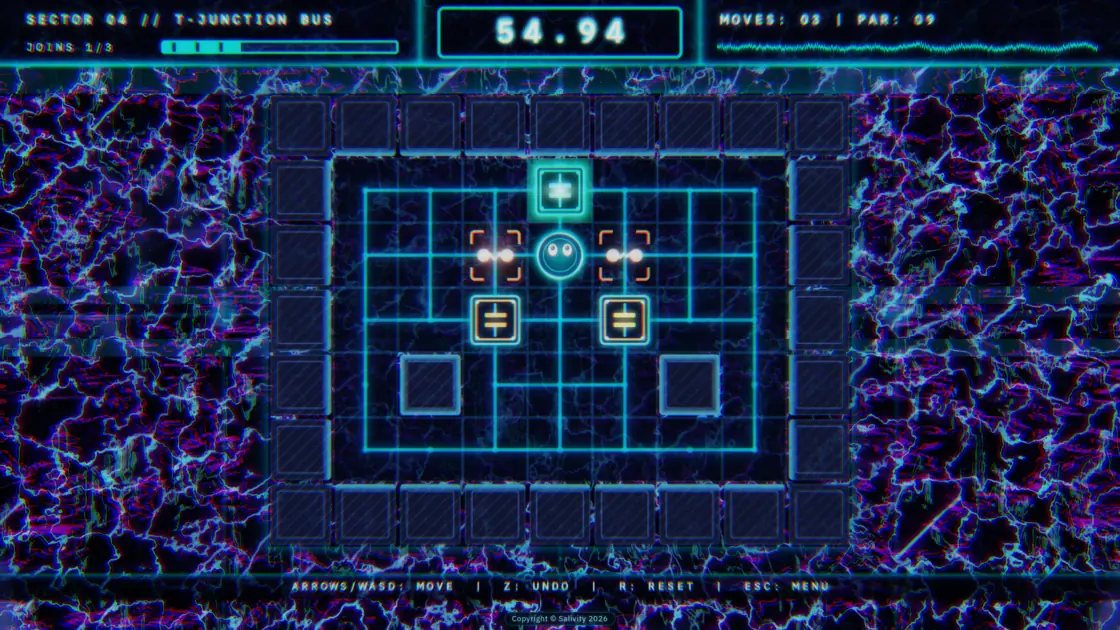
Part of Sokoban's enduring charm is how quickly anyone can grasp its rules: push crates onto marked goals without trapping them against walls or corners, knowing you can only push and never pull. If you want to experience that pure, stripped-back logic right in your browser before diving into more elaborate twists, trying a Sokoban Clone is an easy way to refresh your spatial instincts and appreciate how much depth emerges from just four directional keys.
Why Block-Pushing Puzzles Endure
At first glance, sliding boxes across a grid sounds deceptively simple. In practice, Sokoban puzzles are notoriously deep because every move restricts future options. Pushing a single crate one tile too far can create a deadlock that forces you to rethink your entire sequence from the beginning.
Because the core rules require almost no tutorial, game designers can build astonishingly clever variations on top of them. Instead of relying on fast reflexes or sprawling inventories, Sokoban-like games reward patience, pattern recognition, and sudden "aha" moments when an impossible room clicks into place.
Standout Games Inspired by Sokoban
Over the past decade, indie developers have pushed the block-pushing formula in inventive directions, turning a humble warehouse concept into some of the most acclaimed puzzle games ever made.
Baba Is You
Developed by Arvi Teikari, Baba Is You transforms the rules of the game itself into pushable blocks. Every level contains phrases laid out on the grid, such as "WALL IS STOP" or "FLAG IS WIN." By pushing words apart or combining them into new sentences, you can turn solid walls into passable tiles, become a rock, or rewrite what it takes to win the stage. It takes the spatial logic of Sokoban and fuses it with lateral thinking.
Stephen's Sausage Roll
Created by Stephen Lavelle, Stephen's Sausage Roll is widely regarded as a masterclass in minimalist puzzle design. Set on compact 3D islands, your goal is to roll sausages onto grills so every side cooks evenly without burning. You hold a long fork that acts as a rigid extension of your body, turning simple movement and rotation into intricate spatial riddles. Every single level introduces a fresh insight without adding unnecessary clutter.
Patrick's Parabox
Patrick's Parabox takes classic crate pushing and adds mind-bending recursion. Boxes on the grid are not just solid objects; they are entire rooms with entrances on their sides. You can push a crate inside another box, shrink down to walk into that box yourself, or even push a box into itself to create infinite loops. Despite how wild the premise sounds, the game introduces its concepts gently and lets you experiment freely.
A Monster's Expedition
Developed by Draknek & Friends, A Monster's Expedition swaps rigid warehouse walls for a serene archipelago. You play as a friendly monster knocking down trees and rolling logs to build bridges and rafts between islands. Unlike strictly linear level lists, the game connects its puzzles across an open world, allowing you to sail away and explore another area whenever a tricky island stumps you.
Can of Wormholes
Can of Wormholes starts with a straightforward setup - pushing and pulling wiggly worms across a grid as a rolling tin can - and steadily layers in surprising mechanics like slicing, pushing onto buttons, and wrapping around corners. Its carefully tuned difficulty curve and built-in hint structure make it one of the most rewarding recent additions to the genre.
Void Stranger
For players who want atmosphere and mystery alongside their grid logic, Void Stranger pairs classic tile-pushing challenges with a brooding monochrome aesthetic. Using a staff that picks up and places floor tiles, you navigate descending chambers filled with traps, statues, and hidden secrets that reward careful observation well beyond standard level clears.
What Makes a Great Sokoban-Like Game
Not every block-pushing game achieves the satisfaction of the classics. The strongest entries in the genre share several key traits:
- Instant undo and reset: Experimentation is essential to solving grid puzzles. Being able to rewind a single step or restart a room with one button press removes tedium and keeps players focused on thinking.
- Compact, focused levels: Larger grids do not automatically create better puzzles. The most memorable stages often fit inside a tiny room where every single tile serves a deliberate purpose.
- Clear visual readability: Players should be able to assess the entire board state at a glance. Clean tiles, distinct objects, and unambiguous goals make planning several moves ahead feel natural.
- Emergent surprises: Great Sokoban-likes rarely overwhelm players with dozens of disconnected mechanics. Instead, they take one or two simple interactions and uncover unexpected consequences from them.
Whether you prefer the stripped-down purity of traditional crate pushing or the rule-bending ingenuity of modern indie hits, games like Sokoban prove that tight constraints often spark the richest creativity in puzzle design.